

- Explore Sedona’s Dark Sky Community and discover some of the best places to stargaze, from Airport Mesa’s panoramic red rock views to Doe Mountain’s remote desert setting.
- Experience the magic of Sedona after dark with private rooftop stargazing at Ambiente, a Landscape Hotel, guided astronomy tours, and unobstructed views of the night sky.
- Plan your stargazing adventure with tips on the best times to visit, what to bring, and how to make the most of Sedona’s exceptionally clear skies.
Sedona’s red rocks are only part of what draws people to this high desert. For generations, artists and hikers have found inspiration in sandstone formations, juniper forests, and open terrain. Many visitors also seek out Sedona’s renowned vortex sites as places for self-reflection and renewal. That same sense of wonder continues after sunset, when the desert landscape gives way to a dark sky filled with stars.
Recognized as an official Dark Sky Community since 2014, Sedona has made protecting its night skies part of its identity. Through thoughtful lighting practices and a commitment to reducing light pollution, the city preserves the natural darkness that allows the Milky Way, constellations, and distant planets to stand out against the night sky.
Set within this protected landscape, Ambiente offers a private vantage point for experiencing Sedona’s skies after dark. After a day exploring the red rock country, guests can unwind on their private Atrium rooftop deck or venture out to some of the area’s best stargazing viewpoints.
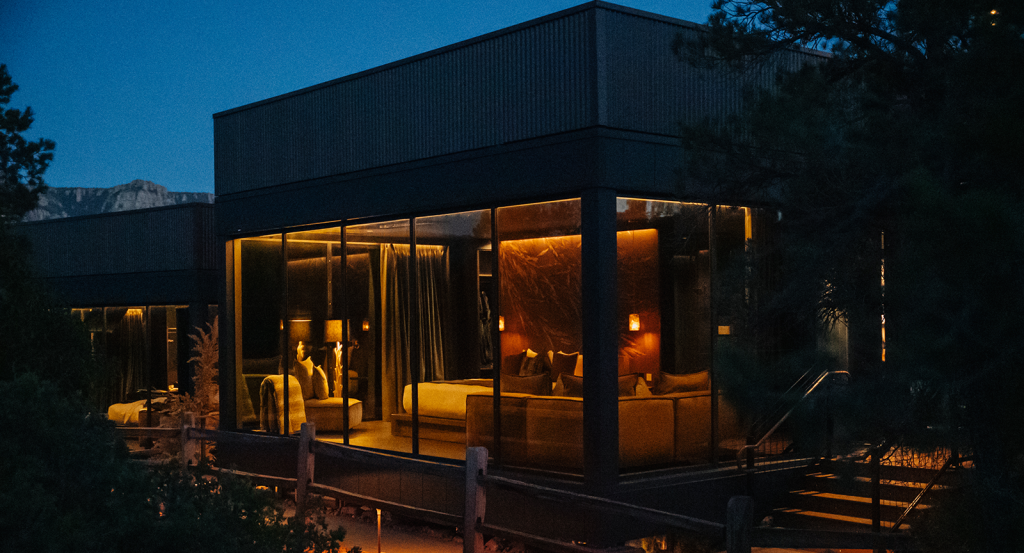
For a Private Stargazing Experience: Ambiente’s Rooftop Atriums
Built to blend seamlessly into Sedona’s high desert and immerse guests in the natural surroundings, Ambiente, a Landscape Hotel, features 40 freestanding, cube-shaped glass Atriums raised on steel piers above the desert floor. The elevated design creates the feeling of floating among the junipers and red rocks. Each Atrium rooftop features a daybed for two and a gas-lit fire pit, creating an intimate setting to slow down and reconnect with the natural world.
Guests at Ambiente can reserve a private stargazing tour during their stay, led by a professional astronomer with access to custom telescopes and giant binoculars. As the night unfolds, guests can discover distant planets, star clusters, nebulae, and constellations as they appear across Sedona’s dark skies.
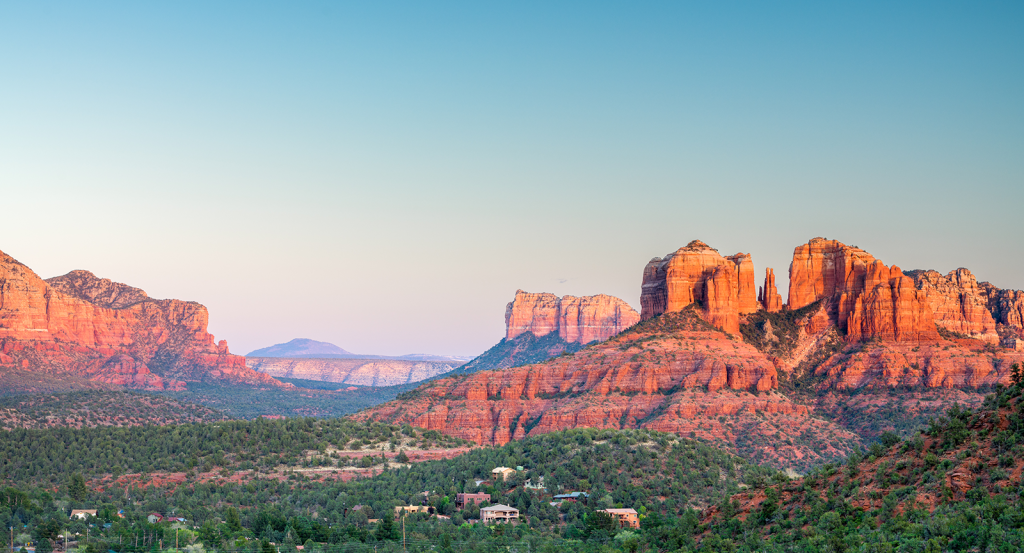
For Panoramic Views: Airport Mesa
Located just minutes from Ambiente, Airport Mesa is one of Sedona’s most accessible viewpoints for taking in the region’s red rock formations. From the top of the mesa, views extend across some of Sedona’s most recognizable landmarks, including the granite spires of Cathedral Rock, the rounded form of Bell Rock, and the distinctive silhouettes of Coffee Pot Rock and Thunder Mountain.
The overlook is an ideal place to pause and take in Sedona’s changing light throughout the evening. As one of the world’s designated Dark Sky Communities, Sedona’s protected night skies are especially visible from elevated viewpoints. At Airport Mesa, the elevated setting and open surroundings present a panoramic, 360-degree view of the skies.
For Darker, More Remote Skies: Doe Mountain
Set within the Red Rock-Secret Mountain Wilderness, Doe Mountain offers a more remote way to experience Sedona’s night sky. The short drive from Ambiente leads to a steep half-mile climb up the mesa, where the flat-topped summit opens to expansive views of the surrounding red rock formations and a darker, more open sky.
Arrive around sunset to watch the sandstone formations glow in shades of orange and purple, then linger as daylight fades and the first stars fill the sky. Some visitors make the full climb to the summit, while others are happy to stargaze from the parking area below. The trail is rocky in places, so sturdy hiking boots and a reliable headlamp are recommended for the descent after dark.
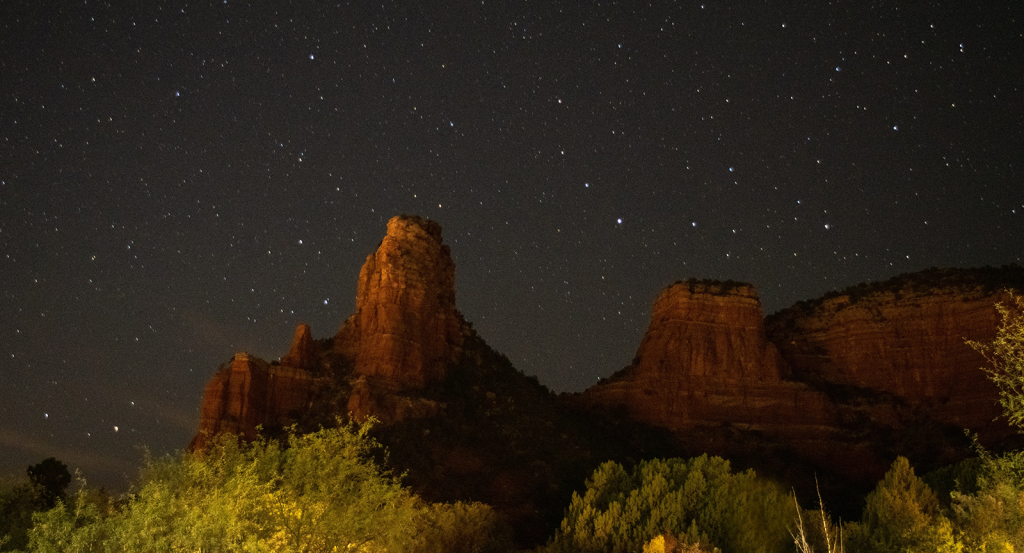
Making the Most of Sedona’s Dark Skies
If your travel dates are flexible, plan your stay around the new moon for some of the best stargazing in Sedona. During this phase of the lunar cycle, there is minimal moonlight to compete with the stars, creating ideal conditions for viewing constellations and the Milky Way.
Since stargazing often means spending extended time outdoors, comfort is key. Sedona temperatures can climb into the 100s during the summer, but nights can still be surprisingly chilly due to the desert climate. Bring a light sweater or blanket to stay comfortable as the evening cools. If you’re exploring independently, consider investing in your own set of binoculars and a red-light flashlight for better night vision.
Above all, the most memorable stargazing experiences are often the simplest: a quiet place to sit, a clear view overhead, and the time to take in the beauty of the night sky fully.
Written by: Megan Eileen McDonough
Edited by: Brenna Darling de Cruz